
Arise and Communications Prove “Knowledge is Power”
October 28, 2026 - 10:54 AM
Many Arise students have found that taking the Communications course C1000 Public Speaking provides a unique opportunity to learn about their culture.
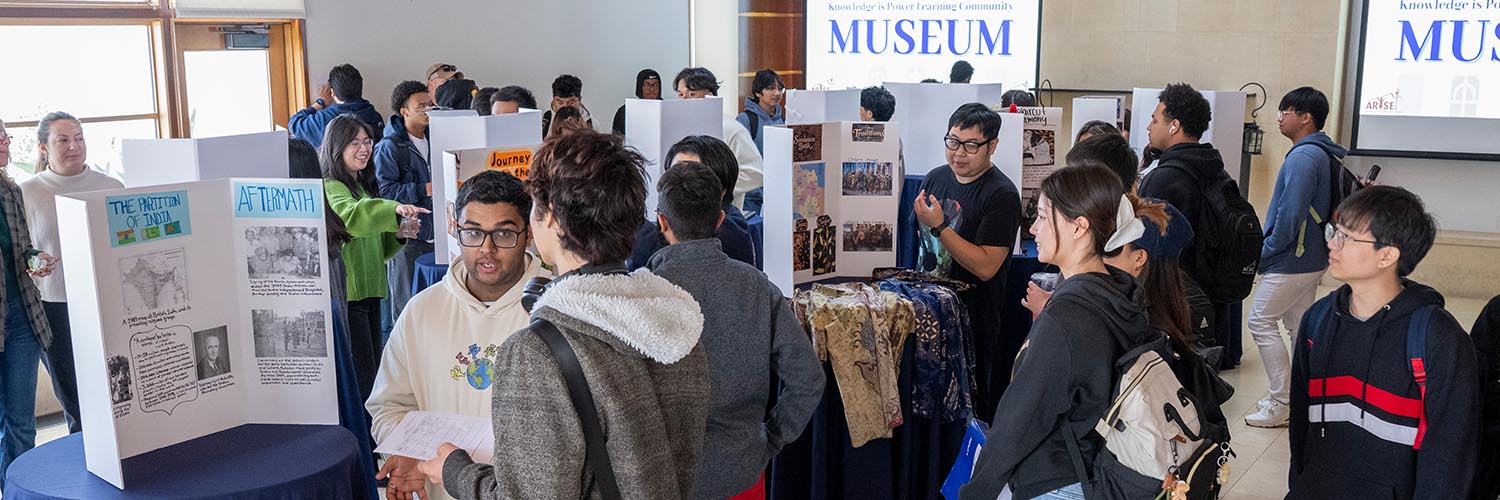
Arise is the Asian American Native Hawaiian Pacific Islander Student Achievement Program (AANHPI SAP). As part of the course’s Informative Speech topic, students were tasked with sharing their native culture by creating a museum exhibit and talking about it to visitors.
“We partner with Arise to teach this Public Speaking course every semester,” said Professor of Communications Thuy Vi Pham.
The Knowledge is Power Learning Community Museum was set up last week in Founders Hall. While most visitors were from other Communications courses, this provided ample crowds to give the students hours of experience in public speaking, while refining their exhibits’ stories.
“This is their impromptu speech part of the course,” explained Pham. “We did a workshop where students looked at their own culture, at the history, at artifacts that represent their culture. Then we helped them narrow down the topic they’re interested in.”
Sela Suliafu, whose exhibit was about Tongan funeral practices, said, “no one really knows what happens at Tongan funerals outside of the culture, so I wanted to share that.”
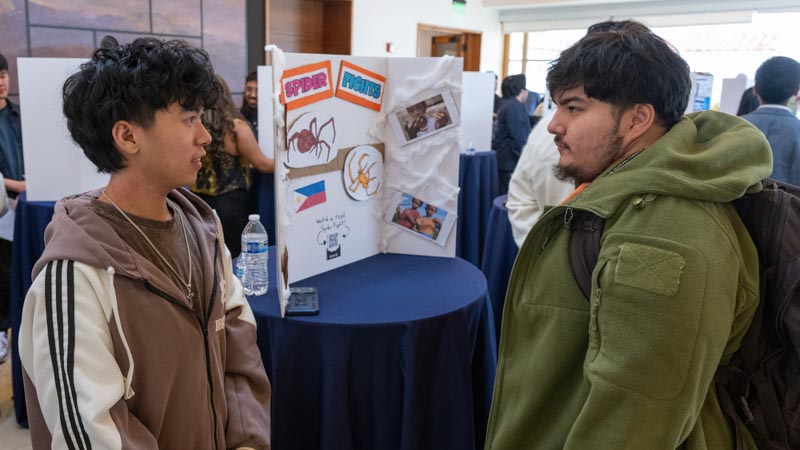
“My cousin came back from the Philippines and showed me YouTube videos of these spider fights over there,” said Nathan Serrano, whose exhibit on the Filipino entertainment included a QR code to watch them in action. “Being in Arise has made me want to learn about my culture, and this is something that not a lot of people know about.”
Dr. Aida Cuenza-Uvas, Director of Arise, said, “We will be showcasing this museum as part of our Arise 15-year Anniversary Celebration in May 2027. We will have an immersive gallery-walk, and this is an example of what that will look like.”
Click to View Gallery (Photos: Robert Bledsoe)


